A letter from Hamburg, South Africa, from Annette.
Dear friends and family,
As many of you already know the project that Doug and I have been working for is in a serious financial crisis.
So here I am, writing the kind of plea letter I always hoped I’d never have to write. I’ve been writing them all week.
But I’d rather tell you a story or two as I still am at heart a writer....which is why I originally came here. This project takes to heart individual lives and pays attention—as a writer must—to the details of living, and often, in this place, to death and disease.
And if the project closes for a month then people will die, and most of them women who are about my age.
They will leave behind children and their mothers will end up taking care of them on small government old-age pensions. They don’t have cars— they have chickens— and maybe a pig or two. Which makes it difficult to get to hospitals for treatment. So they often wait until they get very ill and then they end up going to the hospital where they are often sent home again, untreated, untended, or they come to us. Over and over the story is the same—because the Keiskamma trust has been fast-tracking very ill people onto ARV treatment for their advanced HIV or TB infections for many years already. So all over the district we are well-known and often when we have to transfer patients to hospital they beg to stay.
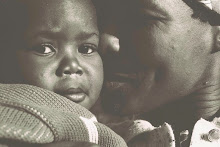
On Wednesday a grandmother came to the treatment centre with an infant strapped to her back with a terrible thrush infection in her mouth. The mother was a patient of ours for one night only, and was so ill in the advanced stages of AIDS that we had to send her to the main hospital where she died the next day. She left behind this infant, a four-year old girl and a 9 year old boy—all being cared for by this grandmother now with no income in a remote village in the hills about 100 kms away from us.
The infant is HIV+, has a terrible infection, and was coughing and coughing all day because she probably has TB. No one knew the four-year old’s status and as the project’s cars were all busy I drove them up to the local clinic for medicines and a referral for a chest X-ray for the baby. Four women and two children crammed in the back seat of my VW golf. Babies coughing. The four year old nearly sat in my lap as I drove. She was going up for a rapid-test to see if she was HIV positive or not. I dropped them off, fetched them all in an hour, but the 4 year old hadn’t had her test done as her chart had been left behind at our centre. I begged the nurses to stay and wait for me to get the chart so they could do the test. I drove all the women and babies back down to eat lunch and went up alone with the 4 year old so we could find out if she had HIV or not. As I drove I prayed in my head no no no no no.
We sat together on a worn wood bench looking at the faded hand-written signs taped to the clinic walls that instruct patients how to wash hands and use condoms and report rape. We had to wait while the nurses finished their lunch. I made amusing popping noises and she—Khanya—giggled. She held my hand. I held hers when the other was getting pricked for the rapid test. She didn’t cry, my stomach hurt from trying not to, and we hummed and poked each other while waiting for the red line to register whether her blood was infected or not.
She was negative. I drove her down and bought her a celebratory bag of chips. Brought her back to her grandmother who didn’t know how to ask me the result so I just said she is fine she is fine it’s ok. The whole hospice quietly breathed a sigh of relief.
So.
That is a small part of my hectic day, which began at 6 in the morning and ended at 11 pm at night with a look at the budgets and bank accounts and I am an administrator and that little girl is only one person and Carol the doctor sees or hears or takes part in this kind of story sometimes 40 times a day—like that day which also ended for her at 11 pm at my house looking at bank accounts.
If we close these people who will have nowhere to go. We are currently the only ones effectively treating paediatric aids. We are also the only ones who drive up patients to clinics for tests and wait with them in hospitals and push for them to get care and we need help to stay open so we can keep doing this.
My lovely friends and colleagues have put in a lot of time and effort into the websites where there are details about how to donate—you can do so via PayPal and if you are in Canada with a cheque.
We need about 15 thousand Canadian dollars to run our health project per month—which includes village health workers in 35 surrounding villages.
We need individuals to donate to keep us running for about three months until we will again receive funds from our major donors and hear back from proposals we have written.
If you can help even a little please do and please email me if you would like any information on our project. annette@keiskamma.org
25 dollars pays for a food parcel for a patient.
120 dollars pays for a nursing assistant in our hospice for a month.
600 dollars pays for all the medicines for our patients for one month.